

Medical College of Wisconsin Combined Internal Medicine/Psychiatry Program

I have been fortunate to learn from so many excellent educators here at MCW. I have also benefited from abundant opportunities to teach: ward teams of eager learners, IM noon reports, Psychiatry case conferences, formal sessions at the Medical College of Wisconsin. More than anything, your encouragement and belief have deepened my passion for medical education. It means the world that I have mentors and program leaders who champion my growth as an educator.
Will Graft, Current Resident
We are looking for innovators, integrators, and ignitors of change.
So much is happening at MCW in the Behavioral Health integration movement – it’s the perfect time for dual-board training here.
Funded by both the Clement J. Zablocki VA Medical Center and Froedtert Health, the combined program capitalizes on the strengths of both categorical programs while building its own identity with Med/Psych rotations and didactics. We have many engaged dual-boarded faculty who work with our residents on the Complexity Intervention Unit, as well as in consultation-liaison psychiatry, perioperative medicine, eating disorders clinic, and integrated behavioral health.
Med/Psych residents at MCW are pioneering new programs and improving existing integrated efforts at the Zablocki VA while leading our new Complexity Intervention Unit at Froedtert Hospital to care for acutely comorbid patients.
Program Highlights
- In our Complexity Intervention Unit (CIU), residents work with categorical residents from both programs and a robust interdisciplinary team to care for medically and psychiatrically complex patients. Additional combined training experiences include the 16th Street Clinic and Inclusion Clinic (LGBTQ+ care clinic).
- Defined medicine-psychiatry didactics and dual-trained faculty-supervised case conferences give our residents an academic home outside of the categorical program offerings.
- Our residents have abundant opportunities for growth and career development through formal and informal mentorship with faculty in both departments of medicine and psychiatry.
- Monthly experiential groups offer a space for the residents to meet, share, and process challenging clinical experiences.
My experience in the CIU is unmatched. It truly gives me the opportunity to practice both medicine and psychiatry simultaneously.
Keayra Morris, Current Resident
Program Director Statement
The Combined Internal Medicine and Psychiatry Program at the Medical College of Wisconsin continues to grow and thrive. We are near our full complement of residents, having nine residents this academic year. Our residents are exceptional, seen as leaders among their peers in the categorical programs and known to exhibit diverse interests in clinical care, academia, advocacy, and research. I am very excited to have our first chief residents this year, who will bring further support, leadership, and teaching to our program.
As a program, we are striving to define our own academic prowess. This year, we introduced a Med-Psych didactic series to complement the didactic series of each categorical program. We want to continue our collaboration with our colleagues in Internal Medicine and Psychiatry through shared lectures and clinical experiences. Finally, we have created unique clinical elective opportunities for our residents to explore based on their own individual interests in electroconvulsive therapy (ECT), dialectical behavioral therapy (DBT), and integrated behavioral health (IBH).
It is truly an exciting time at our program. We look forward to meeting you.
Reasons to live in Milwaukee
Program Requirements
Internal Medicine
- 30 months total of internal medicine
- 4 weeks of emergency room during years 1 or 2
- 4 weeks of care for ICU during years 1 or 2
- 4 weeks of care of ICU during years 3, 4, or 5
- At least 33% (thus 10 months of 30 Medicine months) must involve ambulatory experiences
- Continuity clinic
- At least 4 months of subspecialty experiences (inpatient, outpatient, or a combination)
- Significant exposure to inpatient cardiology
Psychiatry
- 30 months of psychiatry training
- 2 months of neurology (1 month in either PGY1-2, and 1 month in PGY3-5)
- Between 6 and 16 months of inpatient psychiatry
- Inpatient geriatric, addiction, and/or forensics can count as inpatient psych months but only above an initial 6 months of general inpatient psychiatry
- 12 months of organized, continuous, and supervised clinical experience in outpatient treatment with experience in both brief and long-term care of patients
- 2 months of child and adolescent
- 2 months of consultation-liaison psychiatry
- 1 month of geriatric psychiatry (inpatient or outpatient)
- 1 month of addiction psychiatry
- Exposure to the evaluation of forensic issues including writing a forensic report
- Exposure to an organized 24-hour psychiatry emergency service, a portion of which may occur in ambulatory urgent-care settings
- Exposure to community psychiatry (community-based settings, crisis teams, public hospitals, community mental health centers)
Sample Rotation Block Grid

Residents attend a half-day of didactics weekly and rotate in a Primary Care Continuity Clinic throughout the entirety of their training.
Key:

FH = Froedtert Hospital, VA = Zablocki VA, CIU = Complexity Intervention Unit, APH = Aurora Psychiatric Hospital, MHEC = Mental Health Emergency Center, RBH = Rogers Behavioral Health
I was looking for a residency program that would allow me to grow into a well-rounded physician and was impressed by the strong sense of comradery among peers and faculty.
Daniel Pham, Current Resident
Since we are a newer program with prior med-psych influence, residents have the benefit of both learning from seasoned med-psych faculty while also pioneering the development of new combined training experiences.
Anji Li, Current Resident
Frequently Asked Questions
Meet Our Team

Amalia J. Lyons, MD
Associate Professor; Program Director for the Combined Internal Medicine/Psychiatry Program, Associate Program Director for Internal Medicine Residency Program

Sara Lindeke, MD
Program Director, Consultation-Liaison Fellowship; Associated Program Director, Internal Medicine Psychiatry Combined Residency Program; Assistant Professor, Department of Psychiatry and Behavioral Medicine
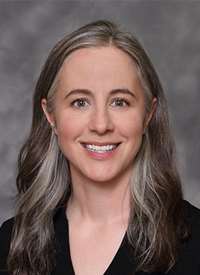
Corinne Palmer
Internal Medicine Psychiatry Combined Residency Program Coordinator

Sara Brady, MD
Program Director, Milwaukee Psychiatry Residency Program; Assistant Professor, Psychiatry and Behavioral Medicine

Kathlyn Fletcher, MD, MA
Program Director Categorial Internal Medicine; Co-Director, Graduate Medical Education Pillar; Professor of Medicine; Member, Clinical Learning Environment Pillar, Kern Institute
MCW Dual Trained Faculty
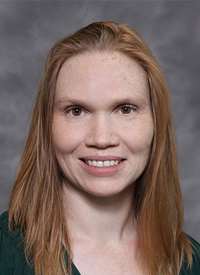
Lisa Wehr Maves, MD
Assistant Professor

Thomas W. Heinrich, MD
Professor; Vice Chair

Kimberly Stoner, MD, MS
Associate Professor
Contact Us
Follow us on social media